

Crawlspace Issues
A crawlspace is a shallow and uninhabitable area, usually between the soil and the first floor of the home. Crawlspaces usually provide access to the electrical, plumbing and heating, ventilation and air conditioning (HVAC) systems located below the first floor. Crawlspaces are an essential part of the home inspection process. We regularly find WDO issues, plumbing leaks, water intrusion, and structural issues. Frankly, crawlspace inspections are not fun due to awkward entrances, tight spaces, airborne inhalants, mold, mice, rats, snakes, hazardous dust and spiders like the Hobo Spider, Brown Recluse and Black Widow.
The following general guidelines are required in new homes:
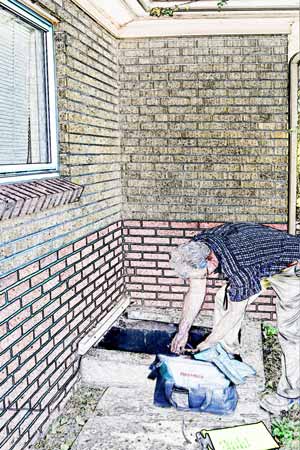
- Minimum access opening is 18 inches by 24 inches.
- Minimum access opening if mechanical equipment (i.e. if an HVAC system is located in the crawlspace) is 30 inches by 30 inches.
- Minimum clearance between the soil and joists is 18 inches and 12 inches between the soil and beams.
- Minimum ventilation every 150 square feet of floor space, requires a one square foot ventilation opening.
Crawlspaces are common problem areas, usually due to poor design and/or construction. Fortunately, in many cases simple corrective measures can greatly improve the condition of the crawlspace. Some common crawlspace issues are:
- Inadequate ventilation and/or insulation.
- Rotted wood components or Mold due to condensation.
- Lack of moisture barrier on ground.
- Inadequate clearance between wood components and the ground.
- Wet crawlspace.
- Rodents
- Inadequate framing and support.
The best way to protect against mould, mildew, and wood rot in a crawlspace is to ensure it is well ventilated and dry.
Inadequate Ventilation

Building Codes contains an unusual provision on the venting of crawl spaces; code enforcement officials are allowed to deviate from the standards if they believe conditions are such that the ventilation standard is too great. The result of this discretion has been tremendous variation in crawl space ventilation around the community. The critical question is: Does the crawl space ventilation keep the crawl space dry enough to prevent deterioration? In considering vent screens the critical concept is net free area. Simply, net free area is calculated by using length times width less the obstruction created by the wire mesh and louver. It is never useful to install louvers over a screen mesh and it is very common to see 1/8 inch screen mesh. The use of 1/8 inch mesh and louvers is never acceptable because the reduction in free area is too great to allow the vent to perform. Vents are located near corners to eliminate inactive air spaces and cross ventilation is essential to positive movement of air by outside breeze or convection.
The most effective crawl space ventilating system has open, 8-inch x 16-inch foundation vents spaced 6 to 8 feet around structures up to about 32 feet wide. Wider buildings occasionally require more ventilation supplied by adding fans in the center of the crawl space. When vents remain open and unblocked by landscape plants, and the crawl space is open and clear for cross-ventilation, few, if any, moisture-related problems exist.
Homeowners unfortunately block off many of the vents believing that they are loosing heat by leaving the vents open. In most cases this is not true if the home has subfloor insulation. Construction practices also often interfere with adequate crawl space ventilation. For example, an attached carport blocks ventilation on an entire side of the house. An earth-filled porch blocks ventilation for its full length, and duct work for heating and air-conditioning systems can completely block cross-ventilation. The minimum standards of some building codes have followed similar restrictions by adding polyethylene sheeting to cover crawl spaces and then reducing vent areas.
For a healthy home, all vents should be left open year round and the living space should be insulated appropriately.
Wet Crawlspace

Water control and management in the crawlspace is essential for maintaining a house. The most common problem associated with wet crawlspaces is that moist conditions can lead to wood destroying fungus that deteriorates exposed framing. In addition, excessive moisture is a conducive condition that can lead to infestation of wood destroying insects, such as termites. In exceptional cases, water penetration into a crawlspace can lead to the undermining of the foundation. For more information on how to deal with wet crawlspaces, follow the links below.
Standing water in a crawlspace is a serious concern. All attempts need to be made to divert water from draining towards your home. Rain gutters need to be clean and large enough for the size of the home. The ground outside the foundation must be graded away from the home to keep water from pooling next to the foundation. Sprinkler heads need to be properly maintained to prevent them from soaking the foundation and crawlspace vents. Water pipes or drain pipes need to be checked for cracks and leaks. Furnace drain lines need to be drained properly. When all of these concerns are addressed and there is still water pooling in your crawlspace, a drainage system may be required. Sometimes because of a high water table or a spring located within the crawlspace, the problem can not be corrected from outside the structure. There are several different methods for draining the crawlspace depending on how the crawlspace is constructed and the severity of the problem.
Mold

Water control and management in the crawlspace is essential for maintaining a house. The most common problem associated with wet crawlspaces is that moist conditions can lead to wood destroying fungus that deteriorates exposed framing. In addition, excessive moisture is a conducive condition that can lead to infestation of wood destroying insects, such as termites. In exceptional cases, water penetration into a crawlspace can lead to the undermining of the foundation. For more information on how to deal with wet crawlspaces, follow the links below.
Standing water in a crawlspace is a serious concern. All attempts need to be made to divert water from draining towards your home. Rain gutters need to be clean and large enough for the size of the home. The ground outside the foundation must be graded away from the home to keep water from pooling next to the foundation. Sprinkler heads need to be properly maintained to prevent them from soaking the foundation and crawlspace vents. Water pipes or drain pipes need to be checked for cracks and leaks. Furnace drain lines need to be drained properly. When all of these concerns are addressed and there is still water pooling in your crawlspace, a drainage system may be required. Sometimes because of a high water table or a spring located within the crawlspace, the problem can not be corrected from outside the structure. There are several different methods for draining the crawlspace depending on how the crawlspace is constructed and the severity of the problem.
Rodents

Rodents love crawlspaces. Especially in fall they all looking for a quiet warm dry place to nest for the winter. Mice especially can squeeze through small cracks to infest your crawlspace. Once in your crawlspace they can easily find ways into your home that even you didn’t know existed. Aside from coming into the home, the problem they create is a combination of rodent urine and feces (and the odor they produce), as well as matted and/or shredded insulation that must be removed and replaced.
Sump Pit

Sump pits are typically found in crawlspaces but they can also be located in basements. A proper sump pit consists of a purpose built basket or pit that it 24″ to 36″ deep with holes all around. The pump usually is 1/3rd to 1/2 horsepower with a float that activates when the water level rises. The drain line should have a backflow device on it. All sump pits should meet the local plumbing codes. For reference here is the International Code Consortium’s requirements:
712.3. Sump design. The sump pump, pit and discharge piping shall conform to the requirements of Sections 712.3.1. through 712.3.5. (Readers should refer to the 2012 version of the ICC IPC, as cited at the end of this article, for these detailed sections regarding the sump pump, sump pit, discharge pipe and fittings, materials, ratings, maximum effluent level and the pump connection to the drainage system.)
712.4. Sewage pumps and sewage ejectors. A sewage pump or sewage ejector shall automatically discharge the contents of the sump to the building drainage system.
For more information here is an article I wrote for the American Society of Home Inspectors Practical Information on Sump Pump Systems

Exterior Surface Grading
The grade or slope of the soil should be designed to direct surface water away from or around the home. Water accumulation next to the home can lead to water penetration problems such as structural damage to wood framing, interior damage to finished surfaces and damage to the homeowners’ belongings. Additional problems such as hydrostatic pressure against foundation walls or surface water mixing with expansive soils next to or under a foundation can lead to cracking of the slab and foundation walls. Proper grading (in conjunction with a gutter and downspout system) is one of the easiest ways to manage surface water, reduce the possibility of water penetration and structural damage from hydrostatic pressure, and control the water content in expansive soils.
Grading of the Soil Around the Perimeter of the Home
The soil around the perimeter of the home should slope away (at a minimum of six inches for the first 10 feet) from the house to prevent rain water from accumulating next to the foundation. Soil in this case does not refer to the topsoil but the layer of soil that is impervious to water such as clay, which directs the water away from the house. Many times the topsoil is porous (as would be used for planting) and absorbs the surface water. The sub-layer of clay or similar non-porous soil prevents the water from continuing in a downward movement and directs the water laterally. If non-porous soil next to the foundation slopes toward the house, water will begin to accumulate.
Grading of the Lot
The overall lot grading is also an important concern since surface water may enter from adjacent properties. Generally, if the house is located on a slope or on a lot that receives water run-off, swales are often used to direct the water around the house. Swales are shallow ditches or depressions in the landscape that capture the water run-off. Then, like a small creek, the water is directed around and away from the house. In most cities and counties, drainage from one property may not intentional be directed toward another owner’s property.
Gutters
Gutters come in different shapes and sizes and should be selected based on particular conditions of the home, including aesthetics, slope and size of the roof, and local weather conditions. The standard gutter is made of aluminum or galvanized steel and is attached to the fascia at the eaves (roof line of the home). Other types include plastic and copper gutters, wooden gutters on older homes, and integral (to the roof) or built-in gutters on some newer homes. The standard gutter is 4 to 5 inches wide. The size of the gutter should match the anticipated amount and volume run-off for the roof. In areas with lots of trees, we recommend leaf guards.
Downspouts
Downspouts, sometimes called “leaders,” are used to direct the water leaving the gutters down to the ground or drainage system in a controlled fashion. Downspouts are secured to the side of the house and are often constructed of the same material as the gutter. Where the downspout discharges the water is important when controlling surface water around the home. Most modern homes have an underground drain system that drains to the street or into storm drains. In older homes we recommend extensions, additional piping that extends laterally from the bottom of the downspout, are used to direct the roof run-off away from the foundation. Splash guards, or blocks, are used to prevent soil erosion if the downspout discharges onto the ground.
Curtain Drains

Though mistakenly referred to as “French Drains,” exterior perimeter foundation drains are designed to collect the water that accumulates next to the foundation wall and divert the water away from the home. Clay Drainage in older homes or perforate plastic drain pipe in new homes are placed next to the foundation footer and covered with a minimum of 6 inches of gravel or crushed stone. The surface water that enters the soil next to the foundation flows down the wall, then following the path of least resistance, flows through the gravel and into the drainage tile or pipe. The water is then directed to either a storm sewer, dry well or, if necessary, to a sump pump to be directed away from the home.
Perforated Perimeter Drain Tile

Modern drain tiles are usually a 4 inch black PVC or Polyethylene plastic pipe that is perforated on only one half or side. The perforated side is placed face down so that water enters from the bottom of the pipe. A filter paper is usually place over the pipe or around the gravel bed to prevent sediment from entering and clogging the pipe.
Vapor Barrier

Though mistakenly referred to as “French Drains,” exterior perimeter foundation drains are designed to collect the water that accumulates next to the foundation wall and divert the water away from the home. Clay Drainage in older homes or perforate plastic drain pipe in new homes are placed next to the foundation footer and covered with a minimum of 6 inches of gravel or crushed stone. The surface water that enters the soil next to the foundation flows down the wall, then following the path of least resistance, flows through the gravel and into the drainage tile or pipe. The water is then directed to either a storm sewer, dry well or, if necessary, to a sump pump to be directed away from the home.